 Residential
 Home Theater
 Home Gym
TLDR:
Golf balls damage walls due to high-speed impact and rebound force. Instead of using bulky netting, the best solution is combining impact screens, acoustic wall panels, and proper spacing. These methods protect your walls, reduce noise, and create a cleaner, more professional golf simulator setup.
Why Golf Balls Damage Walls So Easily
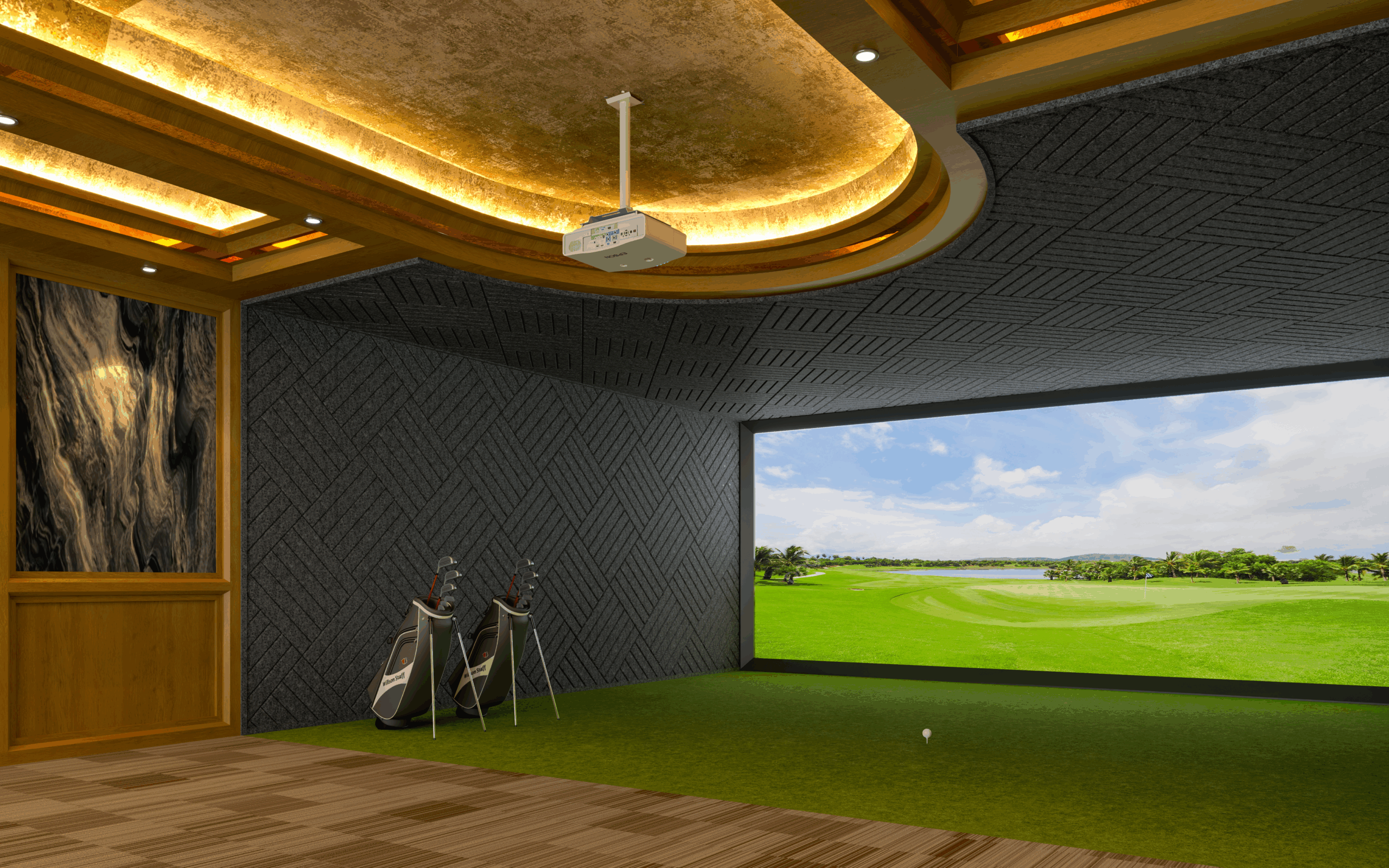
If you’ve ever hit a real golf ball indoors, you already know:
Drywall doesn’t stand a chance.
A golf ball can travel over 150 mph, creating:
- Dents and cracks in drywall
- Paint damage and scuff marks
- Structural wear over time
Even mishits or ricochets can cause unexpected damage in seconds.
The Real Problem: It’s Not Just Direct Impact
Many people assume damage only happens when the ball hits the wall directly—but that’s not the full picture.
Hidden Causes of Wall Damage
| Cause | What Happens |
|---|---|
| Direct impact | Ball strikes wall at high speed |
| Bounce-back | Ball rebounds off screen into side walls |
| Missed shots | Off-center hits hit exposed areas |
| Vibration | Repeated force weakens materials over time |
That’s why simply adding a screen or hitting mat isn’t enough protection.
Why Netting Isn’t Always the Best Solution
Netting is often the default recommendation—but it comes with trade-offs:
Downsides of Netting
- Bulky and visually unappealing
- Can sag or wear over time
- Doesn’t reduce noise effectively
- Balls can still bounce unpredictably
For many homeowners, netting feels like a temporary fix—not a permanent solution.
The Best Way to Protect Your Walls (Without Netting)
Use an Impact Screen With Proper Backing
A high-quality impact screen is your first line of defense.
To make it effective:
- Use a multi-layer screen
- Add padding or backing behind it
- Leave 12–16 inches of space from the wall
This absorbs energy and prevents force transfer to the wall behind it.
Install Acoustic Wall Panels (Clean + Effective Solution)
For side walls and surrounding areas, acoustic panels are the smartest upgrade.
They:
- Absorb impact from stray shots
- Reduce bounce-back
- Protect surfaces without bulky netting
- Improve sound quality
A purpose-built option like golf simulator wall protection panels provides both impact resistance and acoustic control, making them ideal for indoor setups.
Where to Install Protection (Most Important Areas)
Not all walls need equal protection. Focus on high-risk zones:
Priority Protection Zones
| Area | Risk Level | Recommended Solution |
|---|---|---|
| Direct impact wall | Very High | Impact screen + backing |
| Side walls (mid-zone) | High | Acoustic panels |
| Ceiling above hitter | Medium | Panels or soft covering |
| Rear wall | Medium | Partial panel coverage |
This targeted approach saves money while maximizing protection.
Control Ball Bounce and Rebound
Even with protection, bounce-back can still cause damage.
Reduce it by:
- Using softer golf balls (foam or limited flight for practice)
- Adjusting screen tension (too tight = more bounce)
- Adding padding behind impact areas
Upgrade Your Flooring Setup
Hard flooring increases ricochet risk.
Better options include:
- Turf with padding
- Rubber mats
- Foam underlayment
These materials help absorb missed shots and reduce secondary impacts.
Design for “Misses,” Not Just Perfect Shots
Most setups fail because they assume:
“I’ll always hit the screen.”
In reality:
- Mishits happen
- Guests will use your simulator
- Practice sessions get inconsistent
A smart setup protects against:
- Low shots
- High shots
- Off-center hits
Foam vs Real Protection: What Actually Works?
Many people start with cheap foam panels—but quickly realize they fall short.
Comparison Table
| Feature | Foam Panels | Acoustic Impact Panels |
|---|---|---|
| Impact resistance | Low | High |
| Wall protection | Minimal | Strong |
| Durability | Wears quickly | Long-lasting |
| Appearance | Basic | Clean, modern |
| Noise reduction | Limited | Significant |
If you want real protection, you need materials designed for impact—not just sound.
Things You Should Know Before Setting Up Wall Protection
You Don’t Need to Cover Every Inch
Strategic placement is more effective than full coverage.
Focus on:
- Hitting zone
- Ball path areas
- Common miss zones
Spacing Is Critical
Leaving space between:
- Screen and wall
- Panels and hard surfaces helps absorb energy instead of transferring it.
Aesthetic Matters (Especially Indoors)
Unlike netting, modern panel systems:
- Blend into home interiors
- Look like a finished room—not a garage setup
This is especially important for:
- Home offices
- Basements
- Multi-use rooms
Who Needs This Setup Most?
You should prioritize wall protection if:
- Your simulator is indoors
- You’re using real golf balls
- You have limited space
- You want a clean, professional look
The Ideal Setup (No Netting Required)
The most effective net-free setup includes:
- Impact screen with backing
- Acoustic wall panels on sides
- Ceiling protection in hitting zone
- Soft flooring system
This combination:
- Protects your walls
- Reduces noise
- Improves play experience
Final Thoughts: Protect Your Space Without Sacrificing Style
You don’t need bulky netting to protect your walls.
With the right setup, you can:
- Prevent damage completely
- Reduce noise significantly
- Create a premium-looking simulator room
And if you’re looking for a purpose-built solution that handles both impact and acoustics, Residential Sound Panels for golf simulators offer one of the most effective and visually clean ways to protect your space.
Want Help Designing a Quiet Simulator Room?
A great golf simulator isn’t just about the screen or speakers. The room itself plays a big role in how everything sounds. If audio feels off—echo, unclear dialogue, uneven volume—acoustic wall panels can fix it.
At Residential Sound Panels, we design solutions that improve sound clarity and control without overcomplicating your setup. With years of experience, we help turn ordinary rooms into spaces that sound clean and balanced.
Want to improve your golf simulator room? Reach out today to get started.
Use our contact form or call our team at (801) 619-7044 to learn more.