 Residential
 Home Theater
 Home Gym

Not every damaged golf simulator wall panel needs to be replaced. Minor cosmetic damage, loose edges, or small surface issues may be repairable. However, significant deformation, damaged impact protection, compromised backing, repeated structural failure, or severe deterioration are stronger reasons to replace the panel.
At Residential Sound Panels, we look at the condition and function of the panel before recommending replacement. The goal is to fix what can reasonably be fixed while replacing panels that can no longer provide the protection and performance the simulator room needs.
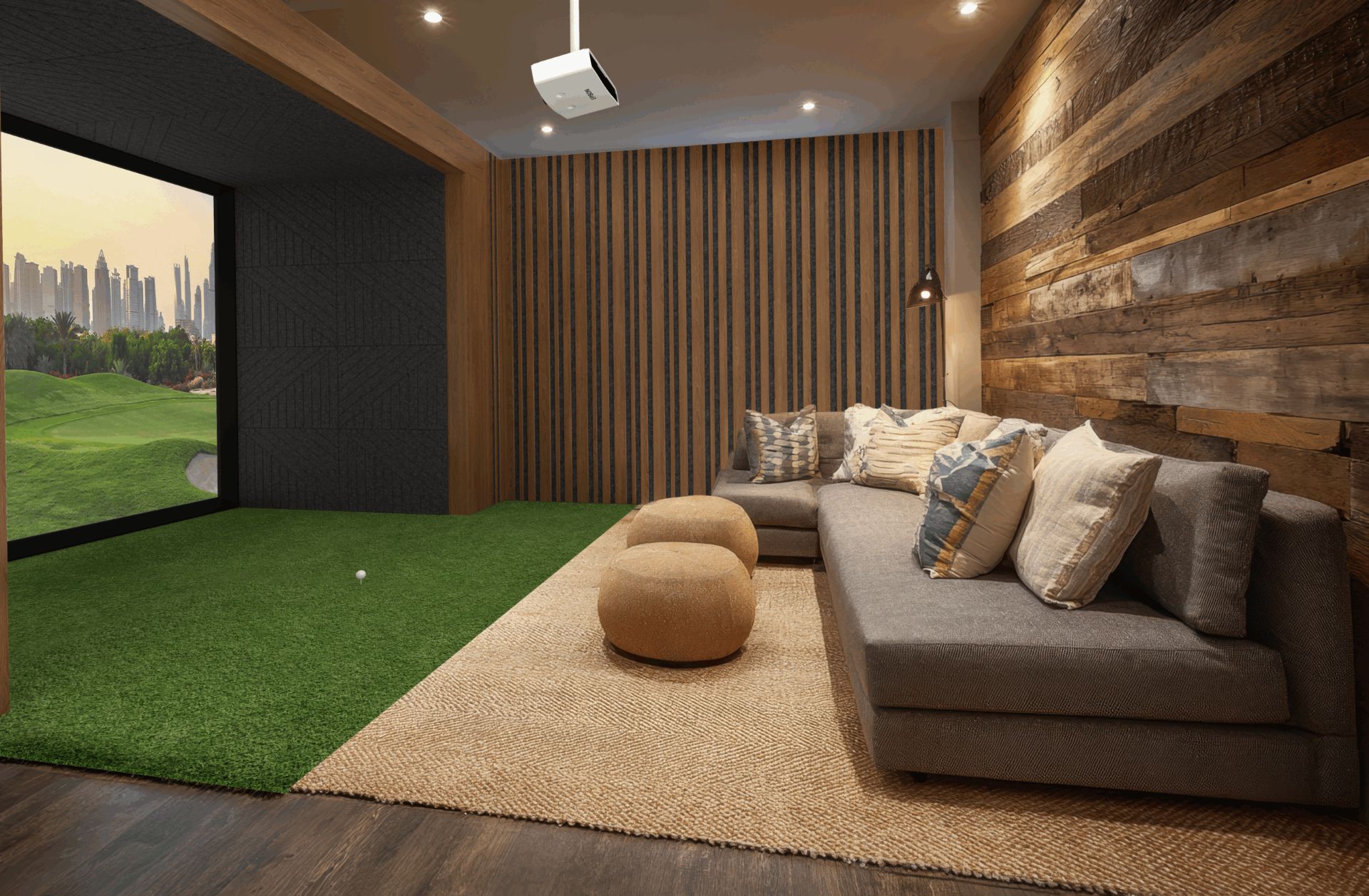
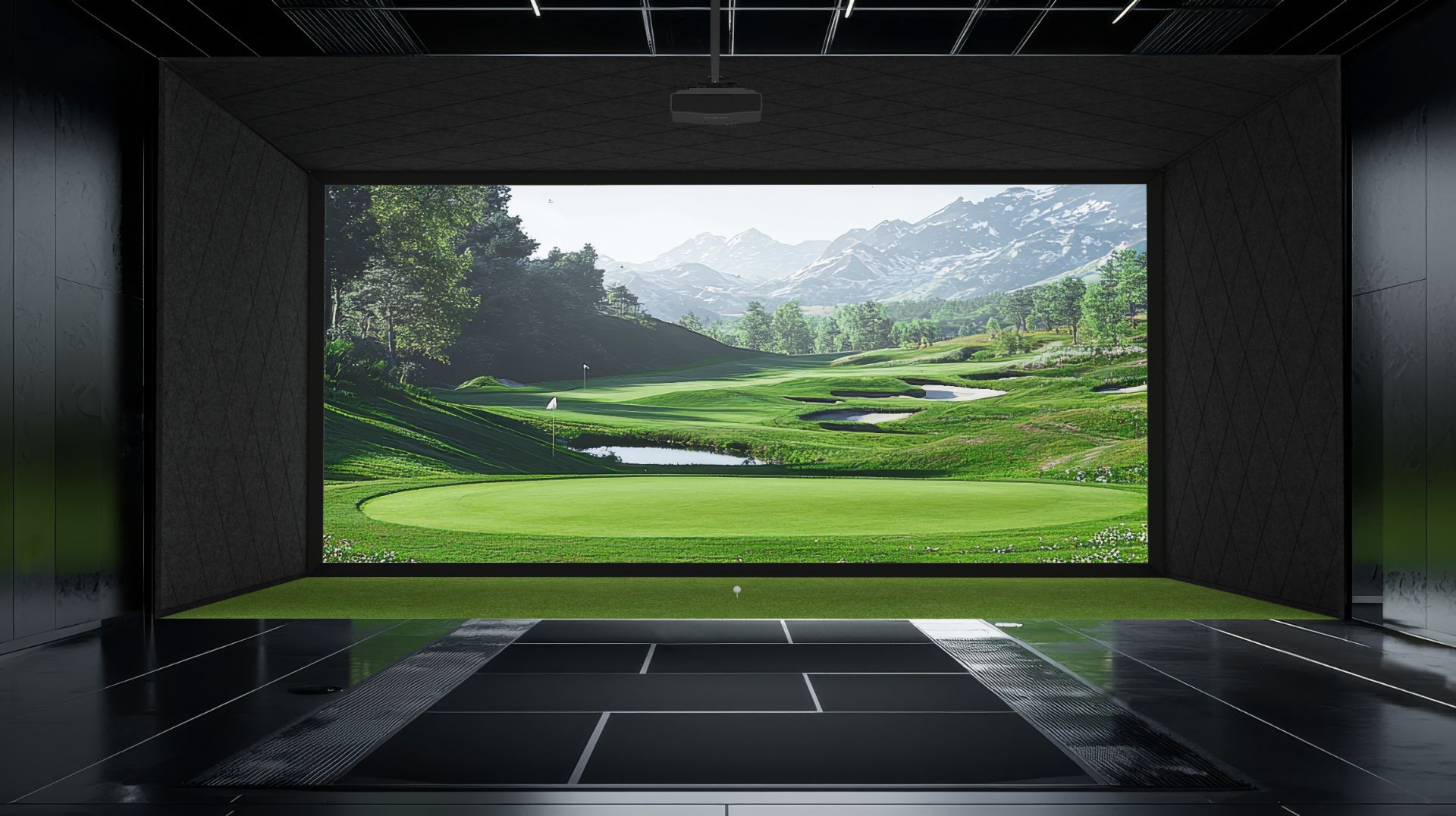
Repair or Replace: What’s the Difference?
Golf simulator wall panels serve two important purposes: helping protect the underlying wall from errant golf balls and improving the room’s acoustics.
Because of that, appearance isn’t the only consideration.
A panel may have a visible scuff but still perform properly. On the other hand, a panel can look relatively normal while its backing, mounting, or impact-absorbing material has been compromised.
The basic question we ask is:
Can the panel still perform its intended function after the damage is addressed?
If the answer is yes, repair may make sense. If the damage affects the panel’s structure or protective performance, replacement is usually the more appropriate solution.
When a Golf Simulator Panel Can Usually Be Repaired
Some types of damage don’t necessarily require a new panel.
Minor Surface Damage
Small scratches, marks, or cosmetic imperfections may be repairable depending on the panel’s exterior material.
If the underlying panel remains intact, there may be little reason to replace the entire section simply because the surface has a minor blemish.
Loose Edges or Covering
A partially loose exterior covering may sometimes be corrected if the underlying panel hasn’t been damaged.
The appropriate repair depends on how the panel was constructed and installed.
Minor Mounting Issues
If a panel has shifted slightly but the panel itself remains structurally sound, the problem may be related to its mounting rather than the panel.
In that situation, correcting the mounting can be more appropriate than replacing the entire panel.
Small Localized Damage
Some acoustic-panel manufacturers specifically provide repair procedures for minor holes and surface damage, while recommending replacement when damage becomes more substantial.
When Replacement Makes More Sense
There are situations where repairing a panel is simply delaying the inevitable.
1. The Impact-Absorbing Material Is Seriously Damaged
Golf simulator panels need to handle more than ordinary wall contact.
If repeated golf-ball impacts have significantly compressed, torn, cracked, or otherwise compromised the material responsible for absorbing impact, repairing the outer surface may not restore the panel’s original function.
In that situation, replacement deserves consideration.
2. The Panel Has Significant Structural Deformation
A panel that is badly warped, crushed, separated, or permanently deformed may no longer sit correctly against the wall.
If the panel cannot maintain its intended shape or mounting position, replacement may be more practical than attempting to restore it.
3. The Backing or Substrate Is Damaged
The backing is an important part of the panel assembly.
If it has cracked, separated, warped, or deteriorated, repairing the visible surface may not address the underlying problem.
4. The Panel Keeps Failing After Repair
If the same panel repeatedly develops the same problem, that is an important warning sign.
Repeatedly reattaching a loose panel or repairing the same damaged area may cost more time and effort than replacing the section with a new panel.
What About a Panel That Has Been Hit by Hundreds of Golf Balls?
Being hit doesn’t automatically mean a panel needs replacement.
Golf simulator wall panels are installed because stray shots happen. Impact-resistant systems are specifically designed for environments where panels may experience incidental ball contact and repeated use.
The important question is the condition after those impacts.
Look for:
- Permanent deformation
- Severe compression
- Torn covering
- Exposed underlying material
- Loose or failing mounting
- Cracks or separation
- Areas that no longer provide adequate protection
Normal marks from use are not necessarily a reason to replace the panel.
When Repair Is the Better Choice
Repair can make sense when:
- The damage is primarily cosmetic
- The panel remains structurally sound
- The impact-absorbing material is intact
- The mounting system is still functional
- The problem is isolated
- The repair can restore the panel’s intended performance
Repairing an otherwise healthy panel can also reduce unnecessary material waste and avoid replacing an entire wall system for a relatively small problem.
When Replacement Is the Better Choice
Replacement is generally worth considering when:
- The panel has major structural damage
- The impact-absorbing core is compromised
- The backing has failed
- The panel repeatedly separates from the wall
- Damage is extensive rather than localized
- The panel can no longer provide the intended protection
- A previous repair has failed
- The cost or effort of continued repair approaches the cost of replacement
The condition of the entire panel assembly, rather than just the visible fabric, should guide the decision.
Can You Replace Just One Golf Simulator Panel?
Often, yes.
One advantage of a modular panel system is that individual sections can potentially be removed and replaced without rebuilding the entire wall.
For example, some golf simulator panel systems are specifically designed so individual panels can be removed and replaced without damaging the wall surface.
This can be particularly useful when one high-impact area experiences substantially more wear than the rest of the simulator room.
Whether this is possible depends on the panel construction and mounting method.
Don’t Ignore the Mounting System
Sometimes homeowners assume the panel itself has failed when the actual problem is the installation or mounting.
If a panel begins moving, separating, or pulling away from the wall, we recommend determining why before simply installing a replacement.
A new panel installed onto a problematic substrate or mounting system can develop the same issue again.
That’s why we evaluate both the panel and the surface it is attached to.
How We Evaluate Damaged Golf Simulator Panels
At Residential Sound Panels, we look at several factors before recommending repair or replacement:
- Type of damage – cosmetic, surface, structural, or impact-related.
- Extent of damage – isolated to one area or affecting the entire panel.
- Panel function – whether it can still provide the intended protection and acoustic performance.
- Mounting condition – whether the panel remains securely installed.
- Age and overall condition – whether additional problems are likely to develop.
- Simulator usage – how frequently the room is used and how much impact the panel receives.
Our goal isn’t to replace a panel simply because it has a mark on it.
It’s to determine whether the panel can continue doing its job.
Frequently Asked Questions
Should I replace a golf simulator wall panel after one direct hit?
Not necessarily. A properly selected impact-resistant panel can be designed to handle incidental golf-ball contact. Inspect the panel for structural or functional damage rather than replacing it solely because it was hit.
Can a torn fabric covering be repaired?
Sometimes. If the underlying panel remains intact, a localized covering repair may be possible. Extensive tearing or damage to the underlying material may justify replacement.
Is a loose panel repairable?
It may be. First determine whether the problem is with the panel or its mounting system. Correcting the installation may resolve the issue without requiring a new panel.
Should I replace the entire wall if one panel is damaged?
Usually not automatically. If the system is modular, an individual damaged section may be replaceable.
How do I know if damage is serious enough for replacement?
Look beyond cosmetic appearance. Significant deformation, damaged impact-absorbing material, compromised backing, failed mounting, or repeated repair problems are stronger indicators that replacement should be considered.
Final Thoughts
The decision to repair or replace a golf simulator wall panel shouldn’t be based on age or appearance alone.
Minor cosmetic or localized problems may be repairable. Significant structural or impact-related damage may require replacement.
At Residential Sound Panels, we focus on whether the panel can continue doing what it was installed to do: help protect the wall, manage sound, and maintain a finished simulator environment.
When only one panel is damaged, a properly designed modular system may allow that section to be addressed without replacing the entire installation. That makes long-term maintenance more practical and helps keep the simulator looking and performing the way it should.
Ready to Get the Right Panels for Your Room?
Whether it’s a simulator build, a home theater upgrade, or a gym that needs quieting down, choosing the right panel type from the start saves money and rework. Choose your application type to get started, or call for a quote and get straight answers on what your specific room actually needs.
Send a room diagram with measurements to jeff@residentialsoundpanels.com and we’ll customize the layout based on your room dimensions and simulator configuration.
Design Your Golf Simulator Panel System
Want Help Designing a Quiet Simulator Room?
A great golf simulator isn’t just about the screen or speakers. The room itself plays a big role in how everything sounds. If audio feels off—echo, unclear dialogue, uneven volume—acoustic wall panels can fix it.
At Residential Sound Panels, we design solutions that improve sound clarity and control without overcomplicating your setup. With years of experience, we help turn ordinary rooms into spaces that sound clean and balanced.
Want to improve your golf simulator room? Reach out today to get started.
Use our contact form or call our team at (801) 619-7044 to learn more.
Design Your Golf Simulator Panel System
References
- Residential Sound Panels. Golf Simulator Wall Panels & Impact Padding. Residential Sound Panels. 2026.
- Residential Sound Panels. Golf Simulator Panel Resources, Product Data, and Care & Maintenance. Residential Sound Panels. 2026.
- TruSim Systems. Acoustic Wall Panels: Modular Impact-Resistant Panels for Golf Simulators. TruSim Systems. 2026.
- Troldtekt. Cleaning, Painting and Repairing Acoustic Panels. Troldtekt. 2026.
- Acoustical Solutions. Golf Simulator Wall Panels: Acoustic and Impact-Resistant Solutions. Acoustical Solutions. 2026.