 Residential
 Home Theater
 Home Gym
Yes, golf simulator wall panels are worth it for most indoor golf simulator setups because they help protect walls from golf ball impact, reduce bounce back, improve room acoustics, and create a safer and more professional golf environment. Golf simulator wall panels also help reduce noise and improve the overall appearance of garage golf simulators, basement golf rooms, and indoor hitting bays.
For many golfers, wall protection becomes one of the most valuable upgrades after experiencing wall damage, excessive echo, or dangerous ricochets.
Why Golf Simulator Wall Panels Matter
Golf simulator wall panels are designed to absorb golf ball impact while reducing sound reflection and echo inside the room.
Without golf simulator wall protection, repeated ball strikes can:
- dent drywall
- crack paint or plaster
- damage wood trim
- create loud impact noise
- increase bounce back risk
- reduce room safety
Golf simulator wall panels help create a cleaner, quieter, and more controlled indoor golf environment.
What Problems Do Golf Simulator Wall Panels Solve?
Many golfers initially focus on:
- launch monitors
- impact screens
- projectors
- hitting mats
But overlook the walls surrounding the simulator.
Golf simulator wall panels help solve common issues including:
| Problem | How Wall Panels Help |
| Drywall damage | Absorb golf ball impact |
| Loud echo | Reduce reflected sound |
| Ball bounce back | Soften ricochets |
| Poor room acoustics | Improve sound control |
| Unfinished appearance | Create a premium look |
| Ceiling damage | Add overhead protection |
High-speed golf shots can exceed 150 MPH indoors, especially with drivers and wedges.
Are Golf Simulator Wall Panels Necessary?
Not every golf simulator room requires full wall coverage, but most indoor setups benefit from some level of protection.
Golf simulator rooms that benefit most from wall panels:
- garage golf simulators
- basement golf rooms
- small indoor golf spaces
- commercial simulator facilities
- high-ball-speed setups
- rooms with drywall or concrete surfaces
Setups that may need minimal coverage:
- large open simulator spaces
- professional enclosures with extensive side netting
- temporary golf simulator installations
The smaller the room, the more important golf simulator wall protection becomes.
Residential Sound Panels Golf Simulator Wall Panels
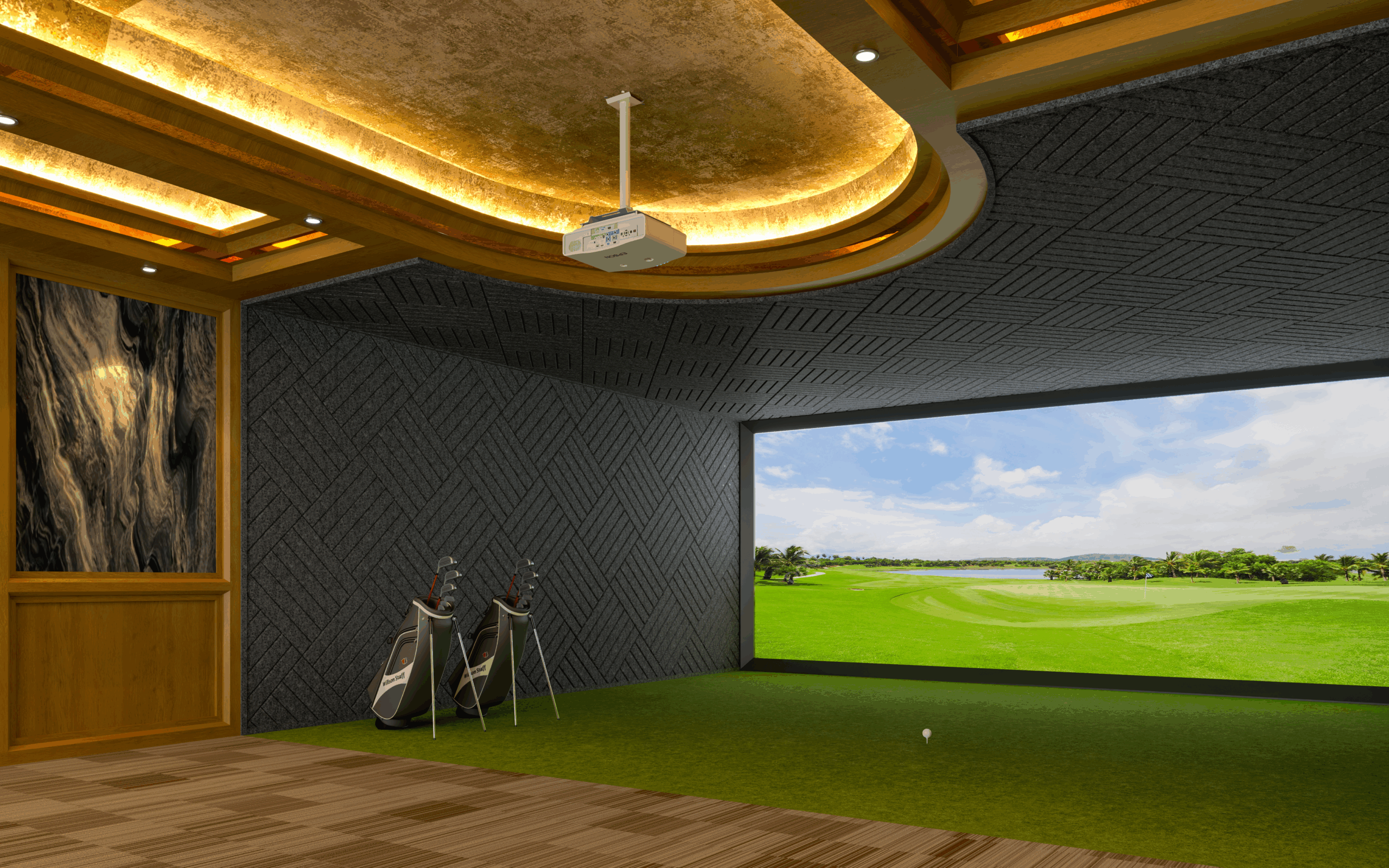
Residential Sound Panels offers custom golf simulator wall and ceiling panel systems designed specifically for residential and commercial simulator spaces.
The panel systems combine:
- golf ball impact protection
- acoustic sound control
- modern architectural aesthetics
- customizable layouts
- simplified installation
Unlike basic foam padding, Residential Sound Panels creates golf simulator wall systems that improve both room protection and overall room design.
What Makes Golf Simulator Wall Panels Worth the Investment?
Golf simulator wall panels provide long-term value by helping protect both the room and the simulator experience itself.
Wall Protection
Repeated golf ball impact can damage:
- drywall
- corners
- trim
- ceilings
- garage walls
Golf simulator wall panels help prevent costly repairs and cosmetic damage over time.
Reduced Bounce Back
Hard wall surfaces can cause golf balls to ricochet dangerously.
Impact-resistant golf simulator wall panels help:
- soften ball impact
- reduce rebound velocity
- improve simulator safety
This is especially important in tight garage golf simulator rooms.
Better Room Acoustics
Golf simulator rooms often contain:
- concrete floors
- drywall
- exposed ceilings
- hard reflective surfaces
These materials create excessive echo and harsh sound reflection.
Acoustic golf simulator wall panels help:
- reduce echo
- soften impact noise
- improve room acoustics
- create a quieter environment
More Professional Appearance
Many DIY golf simulator setups look unfinished without wall treatment.
Fabric-wrapped golf simulator wall panels help create:
- cleaner wall lines
- luxury aesthetics
- modern entertainment room design
- a more immersive golf environment
This is especially valuable for:
- premium golf rooms
- multi-purpose entertainment spaces
- client-facing simulator facilities
Golf Simulator Acoustic Panels vs Basic Foam Panels
Many golfers compare professional golf simulator wall panels with inexpensive foam tiles.
Standard Foam Panels
- lower-cost option
- basic impact absorption
- limited aesthetics
- less acoustic control
Golf Simulator Acoustic Wall Panels
- improved sound absorption
- better echo reduction
- cleaner architectural appearance
- more durable construction
- enhanced simulator room aesthetics
Professional golf simulator wall systems are typically designed for both impact protection and room acoustics.
Do Golf Simulator Wall Panels Reduce Noise?
Yes. Acoustic golf simulator wall panels help reduce:
- golf ball impact noise
- sound reflection
- harsh echo
- room reverberation
Garage golf simulator setups commonly experience echo because of:
- concrete
- drywall
- exposed ceilings
- limited soft surfaces
Golf simulator acoustic panels help create a quieter and more controlled room environment.
Are Golf Simulator Wall Panels Worth It for Garage Setups?
For garage golf simulators, wall panels are often one of the most valuable upgrades.
Garage simulators typically have:
- tighter dimensions
- hard wall surfaces
- exposed ceilings
- stronger sound reflection
- higher risk of mishits
Golf simulator wall panels help improve:
- safety
- durability
- comfort
- aesthetics
- sound performance
How Much Wall Coverage Do You Need?
Most golf simulator rooms do not require every wall to be covered.
Recommended golf simulator wall panel areas:
- side walls near the golfer
- around the impact screen
- ceiling strike zones
- bounce-back risk areas
- enclosed hitting bays
The closer walls are to the hitting zone, the more important wall protection becomes.
Are Golf Simulator Wall Panels Worth It for Soundproofing?
Golf simulator wall panels improve acoustics inside the room, but they are not complete soundproofing systems.
Acoustic wall panels help:
- absorb reflected sound
- reduce echo
- soften impact noise
Full soundproofing may also require:
- insulation
- resilient channels
- acoustic sealing
- decoupled wall construction
What Thickness Golf Simulator Wall Panels Work Best?
Most golf simulator wall panels range from 1 inch to 3 inches thick.
| Panel Thickness | Typical Use |
| 1 inch | Basic acoustic treatment |
| 2 inch | Standard golf simulator protection |
| 3 inch+ | High-impact commercial environments |
Higher-density panels generally provide better impact absorption and sound control.
FAQ About Golf Simulator Wall Panels
Are golf simulator wall panels necessary?
Most indoor golf simulator setups benefit from wall panels because they improve safety, reduce noise, and help protect walls from golf ball damage.
Do golf simulator wall panels stop golf balls?
Golf simulator wall panels help absorb impact and reduce bounce back, though performance depends on panel density and installation.
Are acoustic panels enough for golf simulators?
Standard acoustic panels may not withstand repeated golf ball impact. Impact-resistant golf simulator panels are recommended.
Do golf simulator wall panels reduce echo?
Yes. Acoustic golf simulator wall panels help absorb reflected sound and improve room acoustics.
Are golf simulator wall panels worth it for garages?
Yes. Garage golf simulators often benefit the most because garages typically contain hard reflective surfaces and tighter room dimensions.
Final Thoughts: Are Golf Simulator Wall Panels Worth It?
Golf simulator wall panels are worth it for most indoor golf setups because they help improve safety, protect walls from damage, reduce echo, and create a more professional simulator environment.
Whether building a garage golf simulator, basement golf room, or luxury indoor golf space, properly designed golf simulator wall panels help improve both room performance and long-term durability.
Custom systems like Residential Sound Panels Golf Simulator Wall Panels combine impact protection, acoustic treatment, and modern design to help transform ordinary simulator rooms into premium indoor golf environments.
Want Help Designing a Quiet Simulator Room?
A great golf simulator isn’t just about the screen or speakers. The room itself plays a big role in how everything sounds. If audio feels off—echo, unclear dialogue, uneven volume—acoustic wall panels can fix it.
At Residential Sound Panels, we design solutions that improve sound clarity and control without overcomplicating your setup. With years of experience, we help turn ordinary rooms into spaces that sound clean and balanced.
Want to improve your golf simulator room? Reach out today to get started.
Use our contact form or call our team at (801) 619-7044 to learn more.