 Residential
 Home Theater
 Home Gym
Golf simulator acoustic wall panels can typically provide 2 to 10+ years of service, depending on the panel construction, frequency of use, impact exposure, installation, and room conditions.
A lightly used residential simulator may see many years of service, while a heavily used room can experience more wear much sooner. At Residential Sound Panels, we look at how the simulator will actually be used so the wall system is selected for the demands of the space.
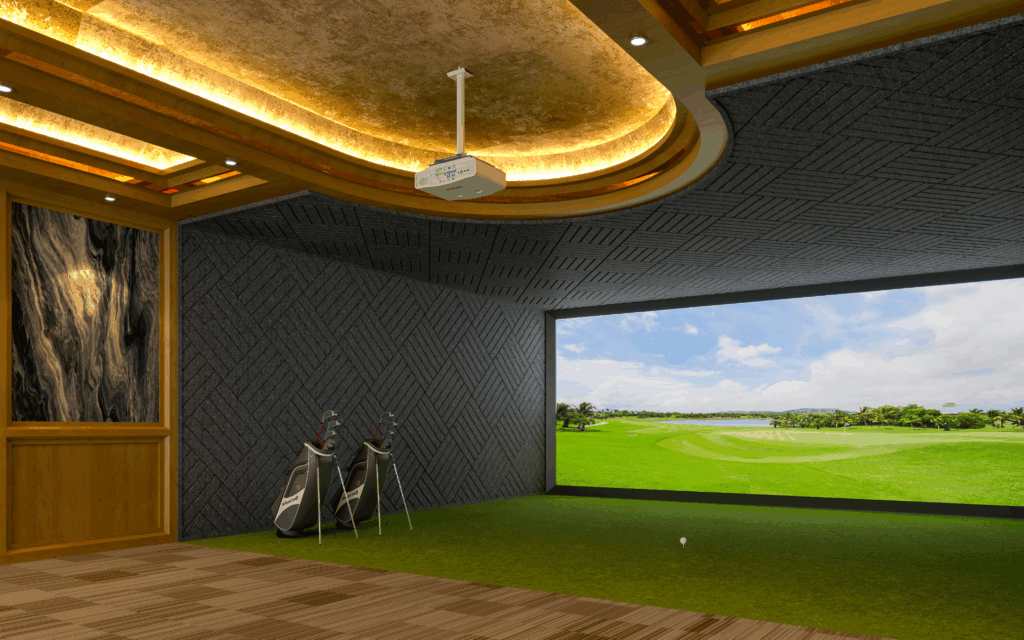
How Long Should Golf Simulator Wall Panels Last?
A realistic lifespan for golf simulator acoustic wall panels is approximately 2 to 10+ years.
That range is intentionally broad because there is no universal expiration date for every panel system.
A simulator used occasionally by one golfer will experience significantly less wear than a room used several times a week by a family or multiple players. Commercial or high-use simulator environments can experience even more cumulative impact.
The materials also matter. A panel designed primarily for decorative sound absorption may not have the same durability as a system selected specifically for a golf simulator.
For that reason, we prefer to think in terms of expected service life rather than a guaranteed replacement date.
With the right materials, proper installation, and reasonable maintenance, a quality system can provide years of useful service.
What Affects the Lifespan of Golf Simulator Panels?
1. Frequency of Use
The more frequently a simulator is used, the more opportunities there are for panels to experience golf-ball impacts.
Repeated exposure is important. A single impact may have little effect, but hundreds or thousands of impacts over time can gradually cause wear, particularly in areas that receive frequent mishits.
2. Panel Construction
Not every acoustic panel is designed for golf simulator use.
Standard acoustic panels are generally intended to manage sound reflections. Golf simulator panels have an additional responsibility: helping protect the wall from stray shots and repeated impact.
The construction of the panel, exterior covering, core material, backing, and mounting system all contribute to long-term performance.
3. Room Conditions
The environment can also affect how materials age.
Direct sunlight, excessive moisture, temperature fluctuations, dust, and general room conditions may affect the appearance or condition of certain materials over time.
This is particularly important when a simulator is installed in a garage or other space that isn’t climate controlled like the main living area of a home.
4. Installation Quality
A durable panel still needs to be installed correctly.
Panels that are not properly secured can move, separate, or develop problems around their edges over time. Proper installation helps the entire system perform as intended and makes future inspection and maintenance easier.
What Usually Shows Wear First?
A panel does not necessarily fail suddenly when it reaches the end of its useful life.
In many cases, the first signs of aging appear on the exterior.
You may eventually notice:
- Fabric wear or scuffing
- Surface marks
- Discoloration
- Compression in frequently impacted areas
- Damaged edges or corners
- Loose exterior covering
- Movement around the mounting system
It’s important to distinguish cosmetic wear from functional damage.
A panel can have visible marks from years of use and still provide effective wall protection and acoustic treatment. Conversely, a panel that looks acceptable may require attention if its structure or mounting has been compromised.
What Does 2 to 10+ Years Actually Mean?
The lifespan range can be useful when planning a simulator, but it shouldn’t be interpreted as a fixed schedule.
Around 2 to 4 years: A heavily used simulator with frequent impacts may begin showing noticeable wear, particularly in high-impact areas.
Around 5 to 7 years: A properly selected residential system with regular use can remain functional while showing normal signs of aging.
Around 8 to 10+ years: A well-maintained system in a suitable environment may continue providing useful protection and acoustic performance for a decade or longer.
These are general expectations, not guarantees. The actual lifespan depends on the specific panel system and how it is used.
Do Golf Balls Automatically Damage Wall Panels?
No.
Golf simulator wall panels are installed specifically to deal with the possibility of stray golf-ball impacts. Getting hit by a ball does not automatically mean the panel needs to be replaced.
What matters is how the panel responds to repeated impacts.
The right system should be selected for the intended use of the simulator rather than assuming that any soft acoustic material will provide adequate protection.
This is one of the reasons we evaluate the room and its intended use before recommending a panel system.
When Should Golf Simulator Panels Be Replaced?
Age alone isn’t necessarily a reason to replace a panel.
Instead, look for signs that the panel is no longer performing its intended function.
Replacement or professional inspection may be appropriate when you see:
- Significant deformation
- Torn or compromised covering
- Damaged impact-absorbing material
- Persistent movement
- Failed mounting
- Damage exposing underlying materials
- Severe deterioration in a frequently impacted area
Minor scuffs or cosmetic marks don’t automatically mean the entire system has reached the end of its life.
Depending on the system and mounting method, individual panels may also be addressed without replacing every panel in the room.
How Can You Extend Panel Lifespan?
Regular inspection is one of the simplest ways to protect your investment.
For a frequently used simulator, periodically check the panels for visible damage, loose coverings, movement, compression, and damaged corners.
Keeping the room clean can also help maintain the appearance of the panels. Always follow the manufacturer’s recommended cleaning method for the specific exterior material.
Most importantly, address problems early. A small localized issue is generally easier to deal with than a mounting or structural problem that has been allowed to continue.
Our Approach at Residential Sound Panels
When we install golf simulator panels, we’re not simply looking at how many panels fit on a wall.
We consider how the room will actually be used.
That includes the frequency of play, type of golf balls being used, room conditions, wall construction, acoustic needs, and areas likely to experience repeated impact.
Our goal is to install a system that provides durable wall protection and effective acoustic treatment while maintaining the finished appearance of the room.
A golf simulator is a significant investment. The wall system should be designed to support that investment for years to come.
Final Thoughts
Golf simulator wall panels aren’t meant to be disposable decorations. They are part of the room’s long-term protection and acoustic treatment.
With the right materials, proper installation, and reasonable maintenance, a well-designed panel system can provide 2 to 10+ years of useful service, and some installations may last beyond that.
At Residential Sound Panels, we help homeowners choose and install golf simulator panels based on how the room will actually be used, not simply based on appearance or panel quantity.
Frequently Asked Questions
How long do golf simulator acoustic wall panels last?
Golf simulator acoustic wall panels can generally provide 2 to 10+ years of service, depending on construction, usage, impact exposure, installation, and environmental conditions. Some systems may last longer with appropriate use and maintenance.
Do acoustic panels wear out from golf-ball impacts?
They can experience wear over time, particularly in frequently impacted areas. However, an impact does not automatically mean a panel needs replacement.
Can one damaged panel be replaced?
Depending on the panel and mounting system, individual sections can often be repaired or replaced rather than replacing the entire wall.
Should I replace panels just because they look older?
Not necessarily. Cosmetic wear does not always mean the panel has stopped providing protection or acoustic performance. The panel’s physical condition and function should also be considered.
How can I make golf simulator panels last longer?
Choose panels appropriate for simulator use, have them professionally installed, inspect them periodically, and address damage or mounting problems before they become more serious.
Ready to Get the Right Panels for Your Room?
Whether it’s a simulator build, a home theater upgrade, or a gym that needs quieting down, choosing the right panel type from the start saves money and rework. Choose your application type to get started, or call for a quote and get straight answers on what your specific room actually needs.
Send a room diagram with measurements to jeff@residentialsoundpanels.com and we’ll customize the layout based on your room dimensions and simulator configuration.
Design Your Golf Simulator Panel System
Want Help Designing a Quiet Simulator Room?
A great golf simulator isn’t just about the screen or speakers. The room itself plays a big role in how everything sounds. If audio feels off—echo, unclear dialogue, uneven volume—acoustic wall panels can fix it.
At Residential Sound Panels, we design solutions that improve sound clarity and control without overcomplicating your setup. With years of experience, we help turn ordinary rooms into spaces that sound clean and balanced.
Want to improve your golf simulator room? Reach out today to get started.
Use our contact form or call our team at (801) 619-7044 to learn more.
Design Your Golf Simulator Panel System
References
- Residential Sound Panels. Golf Simulator Wall Panels and Acoustic Protection. Residential Sound Panels. 2026.
- Residential Sound Panels. Golf Simulator Panel Design, Materials, and Installation Options. Residential Sound Panels. 2026.
- Audimute. Product Warranty and Acoustic Treatment Information. Audimute. 2026.
- Acoustical Society of America. Room Acoustics and Sound Absorption Fundamentals. Acoustical Society of America. 2026.
- BEIEN Acoustic Panel Factory. What Is the Life Expectancy of Acoustic Panels? How Long Do Acoustic Wall Panels Last? BEIEN. 2026.
- TruSim Systems. Acoustic Wall Panels for Golf Simulators. TruSim Systems. 2026.